WISDOM TEETH REMOVAL IN ZIONSVILLE AND WHITESTOWN
See exactly what's happening with 3D imaging. Whenever it's clinically appropriate, Dr. Desai removes your wisdom teeth right here, with no extra office, no extra paperwork, and no long wait.
Wisdom tooth pain often comes on fast. Call us. We hold open time every day, and we'll do everything we can to see you the same day.
Call 317-973-4855Swelling, a bad taste, or trouble opening your mouth can mean the gum over a wisdom tooth is infected. That's worth a look soon.
Book an evaluationGet a clear answer. We'll show you your 3D scan and explain exactly why, or why not.
Book an evaluationWe'll evaluate them, explain everything to both of you, and help you plan around school breaks.
See the best time to bookThat's normal. We'll walk you through every step, offer comfort options, and give you a clear plan for recovery.
See what recovery is likeWhenever it's clinically appropriate, we handle the removal right here. One office, one team.
Book an evaluationTwo minutes from Dr. Desai on wisdom teeth, including how we evaluate them, when they need to come out, and what recovery is really like.
Wisdom teeth are your third molars, the last teeth to come in, usually between the late teens and mid-twenties. For many people, there just isn't enough room in the jaw.
When that happens, a wisdom tooth can get stuck under the gum or bone, or come in at an angle. Dentists call that "impacted."
Book Your First Visit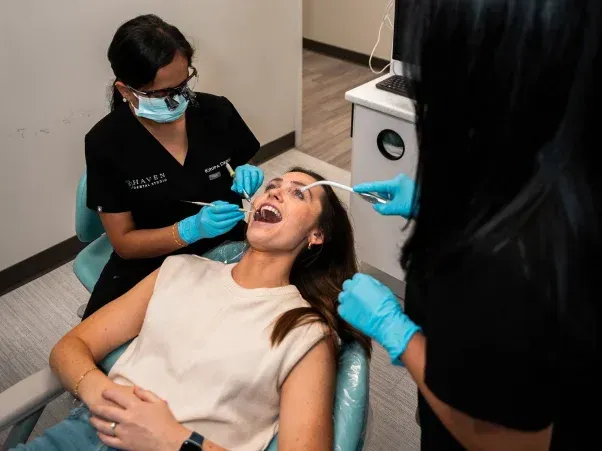
Here is what can happen when a wisdom tooth runs out of room.
Pain and pressure in the back of the jaw.
Food and bacteria get trapped under the gum flap over a partly erupted tooth. This can cause swelling, a bad taste, and trouble opening your mouth.
An angled wisdom tooth can push against your second molar and cause decay or damage that's hard to reach and clean.
Less often, a fluid-filled sac can form around an impacted tooth and affect the bone.
Not every wisdom tooth needs to come out. Some come in straight, healthy, and easy to clean. The right answer depends on what's happening in your jaw, and that's exactly what 3D imaging shows us.
Here is how it often goes when a wisdom tooth starts causing trouble.
A referral to an office you've never been to.
Then another appointment for the actual removal.
Often while you're still hurting.
And nobody to call who knows your history.
We built our wisdom tooth care to avoid every one of those.
Ask these on one phone call. It takes five minutes and tells you more than every review you will read tonight.
Inside the free guide:
Written by Dr. Desai, Haven Dental Studio, Zionsville, Indiana.
Ask these on one phone call. It takes about five minutes, and it will tell you more than every review you will read tonight.
Start the QuizEvery wisdom tooth case follows the same calm, clear path. You'll know what's happening, why, and what comes next.
A clear picture, not a guess.
We take a cone-beam 3D scan of your jaw. Unlike a flat X-ray, it shows the exact position of each wisdom tooth, the shape of the roots, and how close they sit to the nerve and the sinus. Then we put it on the screen, and you see it too.
Out, or not? And why.
Dr. Desai walks you through what she sees. If your wisdom teeth are healthy and causing no problems, she'll tell you, and we'll simply keep an eye on them. If they need to come out, she'll show you why, right there on your scan.
One team whenever it's appropriate.
Whenever it's clinically appropriate, Dr. Desai removes your wisdom teeth right here at Haven Dental Studio. If your case is complex, for example if a root sits very close to the nerve, she'll tell you honestly and coordinate your care with a trusted oral surgeon, so you're not starting over on your own.
You'll know every step before it happens.
We make sure you're completely numb before we begin, and we check in with you throughout. Comfort options are available, from headphones and a blanket to sedation options. You'll get your cost in writing before anything begins.
You're never on your own.
You'll go home with simple written instructions, a recovery timeline, and a direct number to call. We'll check in with you the next day and see you for a follow-up visit if needed.
Curious how the rest of your visit runs? We keep every appointment calm and on time.
See how we run every visitEarlier is often easier. In the late teens and early twenties, the roots are usually not fully formed, the bone is softer, and healing tends to be faster. Waiting until a wisdom tooth causes trouble can mean more complicated removal and a longer recovery.
But don't wait if it hurts. Pain, swelling, or a bad taste in the back of your mouth is a reason to come in now.
A little timing goes a long way when you're planning around school and insurance.
Plan around breaks. Winter break, spring break, and summer are popular times. Book the evaluation a few weeks ahead to get the date you want.
Leaving for college soon? Get it done before they go, so recovery happens at home with you nearby.
Check your insurance year. If you've met your deductible, finishing before December can lower your cost.
The biggest fear for most patients is not knowing what recovery actually feels like. Here is a realistic picture of how it usually goes.
Rest. Some bleeding and swelling is normal. Bite on gauze, keep your head raised, and use ice on your cheek. Stick to cool, soft foods.
Swelling usually peaks, then starts to go down. Keep up with your pain relief as directed. Soft foods like yogurt, smoothies (no straw), eggs, and mashed potatoes work well.
Most people feel much better and are back to school or work. Start gentle salt water rinses as directed.
The gums continue to heal. Most people are back to normal eating.
These three habits protect the blood clot and help you heal faster.
Call us if your pain gets worse after day 3 instead of better, if bleeding won't stop, if you have a fever, or if swelling keeps increasing. Worsening pain a few days after removal can be a sign of dry socket, which we can treat quickly.
A little preparation makes the day go smoothly and your recovery easier. Here are five simple things to do before your visit.
If you choose a sedation option, plan for someone to drive you home.
We'll give you eating instructions to follow before your visit.
Yogurt, applesauce, smoothies, soup that isn't too hot, and ice packs are all good to have on hand.
Plan for a quiet day or two afterward. Most people go back to school or work within a few days.
It means more of your visit is about you.
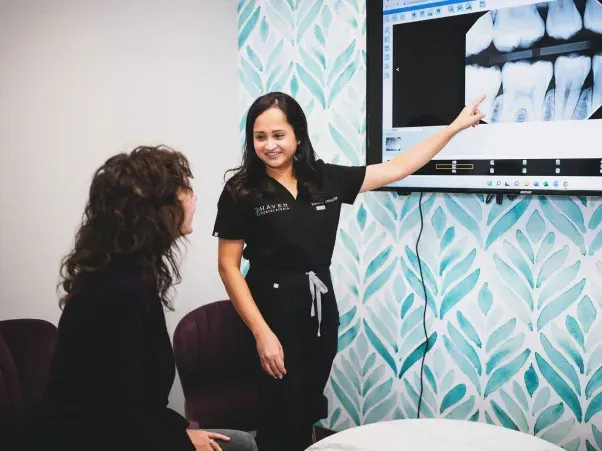
"So many patients come to me in pain, expecting to be sent somewhere else and told to wait.
I have a dental surgery degree, and with 3D imaging, I can see exactly where a wisdom tooth sits, how the roots are shaped, and how close it is to the nerve. When it's appropriate to remove it here, I do. You stay with a team that already knows you.
And when a case is better handled by a surgeon, I'll tell you that too, and help you get there. My job is to give you the honest answer, not the convenient one."
Here is what Dr. Desai brings to every wisdom tooth case.
The thing our patients write about most is how their visit felt. Calm. Unhurried. Kind. That matters even more when you walk in with a toothache.
Wisdom tooth removal is not one flat price, so here is what to know before you book.
How many teeth are coming out, whether they've come in or are still under the gum or bone, and which comfort options you choose.
We're in network with most PPO plans, and many plans cover part of wisdom tooth removal. Some medical plans may also apply. We'll verify your benefits before your procedure.
Our membership plan includes discounts on treatment.
Either way, you'll get your exact cost in writing before anything begins.
Book Your First VisitBook a Wisdom Tooth Evaluation. We'll show you your 3D scan, give you an honest answer, and handle it here whenever it's appropriate.
Most PPO plans accepted. We hold open time every day for patients in pain.
Here are the questions patients in Zionsville and Whitestown ask most often about wisdom tooth removal.
Not always. If they've come in straight, are healthy, and you can clean them well, they may be fine. They often need to come out when they're impacted, causing pain or infection, or damaging the tooth next to them. Your 3D scan shows us which situation you're in, and we'll show you too.
Whenever it's clinically appropriate, Dr. Desai removes wisdom teeth right here at Haven. If your case is complex, for example if a root sits very close to the nerve, she'll tell you honestly and coordinate your care with a trusted oral surgeon.
Call us right away. We hold open time every day for patients in pain, and we'll do everything we can to see you the same day. Whenever it's clinically appropriate, we treat the problem in that same visit.
A regular X-ray is flat. A cone-beam 3D scan shows the exact position of the tooth, the shape of the roots, and how close they are to the nerve and sinus. That means a safer plan and a clear answer you can see for yourself.
You'll be completely numb before we begin, and we check in with you throughout. Most people feel pressure, not pain. Afterward, some soreness and swelling are normal for a few days, and we'll give you a clear plan to manage it.
Most wisdom tooth removals are done with local numbing. We also offer laughing gas and oral sedation for patients who want to feel more relaxed. We'll talk through what's right for you.
It depends on how many teeth are coming out and where they sit. Many removals take under an hour. We'll give you a time estimate at your evaluation.
Most people feel much better within three to four days and are back to school or work within a few days. Full healing of the gums takes a couple of weeks. You'll get a day-by-day recovery plan.
Dry socket happens when the blood clot that protects the socket comes loose too early. It usually shows up as pain that gets worse a few days after removal instead of better. Avoid straws, smoking, vaping, and hard spitting for the first few days. If it happens, call us. It's treatable.
Stick to cool, soft foods for the first few days, like yogurt, applesauce, smoothies (no straw), eggs, mashed potatoes, and soup that isn't too hot. Avoid crunchy, hard, and spicy foods until you've healed.
Many people have them evaluated in their late teens. Removal is often easier when the roots aren't fully formed. But there's no single right age. It depends on how the teeth are developing, which is what the evaluation shows.
It depends on how many teeth, whether they're impacted, and which comfort options you choose. Many insurance plans cover part of it. You'll get your exact cost in writing before anything begins.
Often, yes. Many patients prefer one procedure and one recovery. Dr. Desai will recommend what makes sense for your situation.
Yes. We see the whole family, and you're welcome to be there for your teen's evaluation so you hear everything firsthand.
You're not alone, and you're in the right place. We explain every step before it happens, go at your pace, and offer comfort options. If you need a break, just raise your hand.
Schedule your appointment today and discover why we are the preferred choice for dental health.
 3205 S US 421, Zionsville, IN 46077

 317-973-4855